




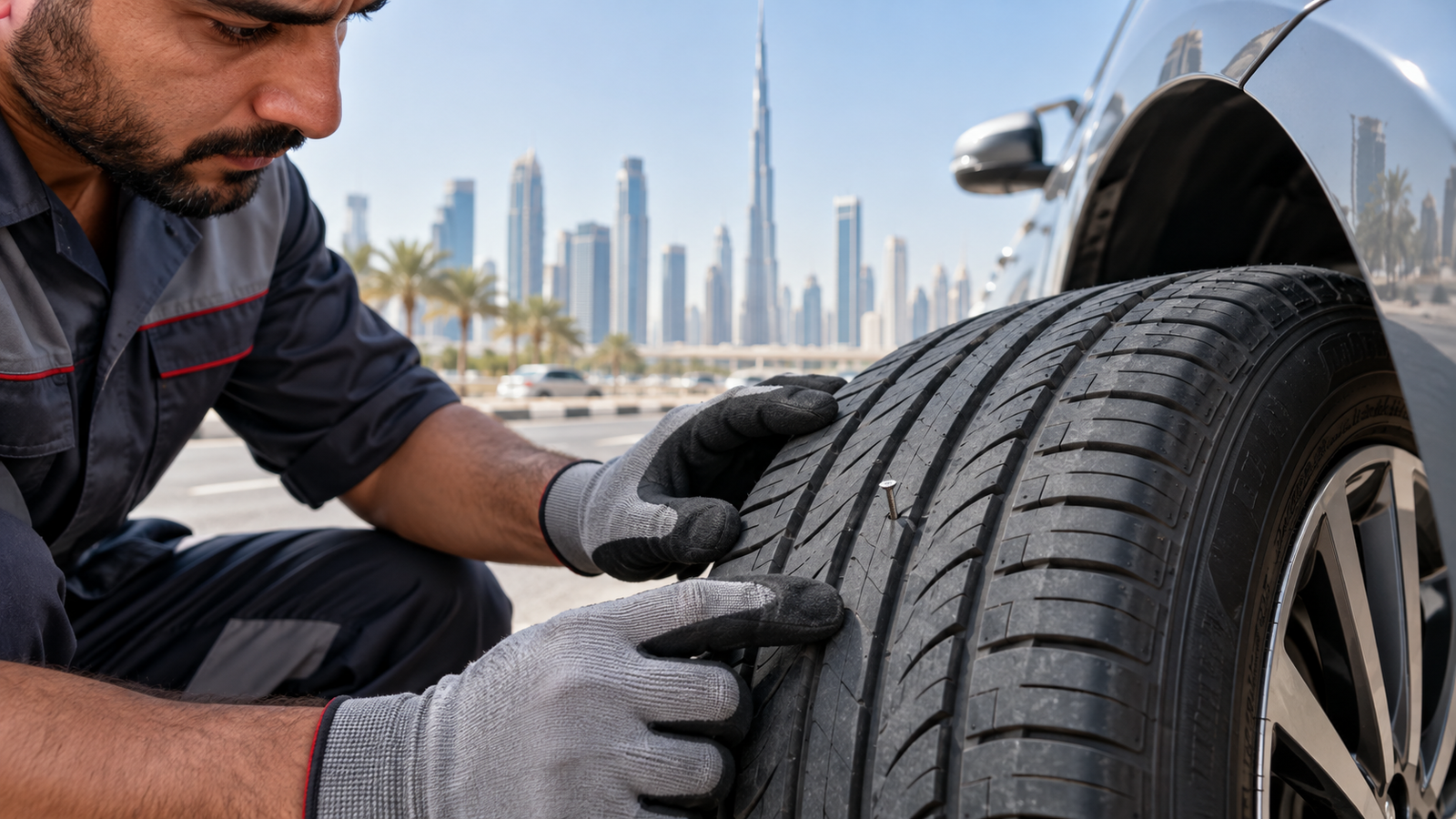

Can a tyre puncture be repaired? The decision depends on where the tyre is damaged, how large the puncture is, and whether driving on low pressure has damaged the tyre internally. In Dubai, a small nail in the centre of the tread may be repairable, but a puncture near the shoulder, sidewall damage, a bulge, or a tyre driven while flat may make replacement the safer choice.
Before deciding, do not judge a tyre by the size of the visible hole alone. A qualified tyre technician needs to inspect the damage and determine whether the tyre meets the relevant repair requirements.
If your tyre has lost pressure, is visibly damaged, or feels unstable, stop somewhere safe and avoid driving on it. You can contact 800Tyre’s tyre puncture repair service in Dubai to discuss your location and arrange an assessment.
Can a Tyre Puncture Be Repaired? The Quick Answer
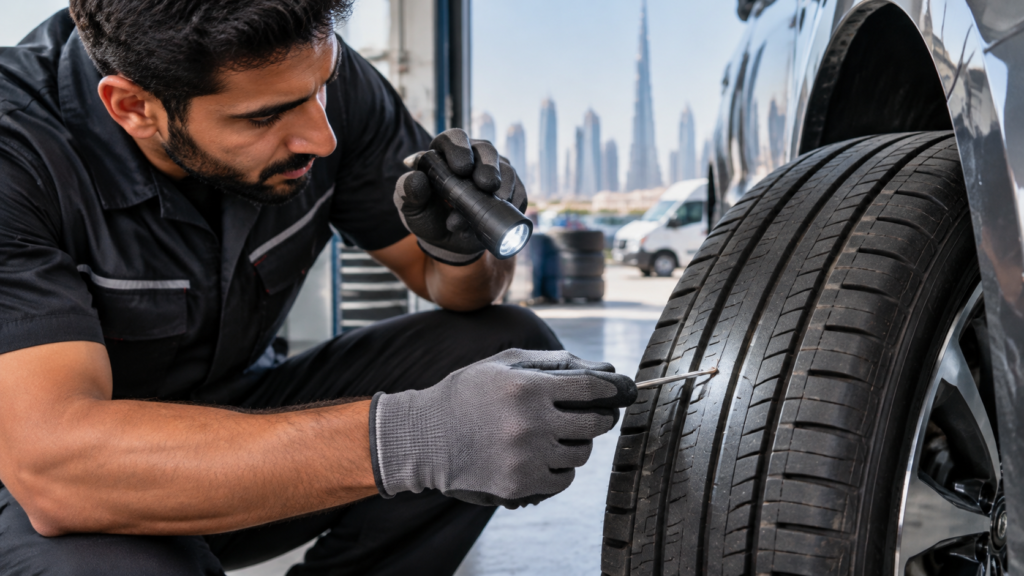
Yes, some tyre punctures can be repaired, but not every puncture is safe to repair.
| Tyre condition | Typical decision |
| Small puncture in the central tread area | May be repairable after inspection |
| Puncture close to the tread shoulder | Usually requires replacement |
| Puncture or cut in the sidewall | Generally requires replacement |
| Tyre with a bulge, exposed cords, or serious structural damage | Replacement is usually necessary |
| Tyre driven while flat or severely underinflated | Requires internal inspection; replacement may be necessary |
| Multiple punctures close together or previous repairs near the damage | Requires professional assessment |
These are general guidelines, not a remote diagnosis. The tyre manufacturer’s instructions, tyre construction, damage limits, previous repairs, and applicable repair standards must also be considered.
Michelin’s tyre repair guidance explains why the damage location and the tyre’s internal condition matter when deciding whether repair is appropriate.
Tyre Puncture Repair vs Replacement: What Is the Difference?
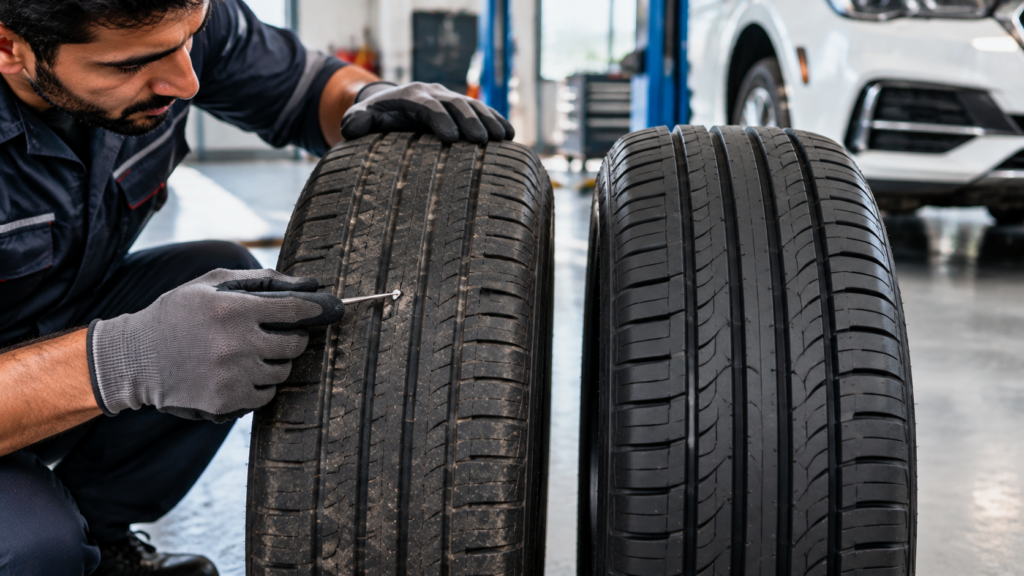
The correct choice is the option that leaves the tyre safe for continued use. Repair should not be recommended simply because the visible puncture looks small, and replacement should not be recommended without explaining the reason.
When tyre puncture repair may be possible
A professional may consider repairing a tyre when:
- The puncture is within the permitted repair area of the tread.
- The injury meets the applicable size and damage limits.
- The tyre has not suffered unacceptable internal damage from driving underinflated.
- The tyre’s overall condition, tread, and repair history are suitable.
- The tyre manufacturer and relevant repair guidance permit the repair.
A proper assessment generally involves removing the tyre from the wheel so the technician can inspect the inside. A repair should address the injury and seal the inner liner using an appropriate repair method.
When replacement is the safer option
Replacement may be necessary when:
- The puncture or cut is in the sidewall or shoulder area.
- The tyre has a bulge, exposed cords, or significant structural damage.
- Driving on a flat tyre has damaged the inner sidewall or other internal components.
- The injury is too large, irregular, or otherwise outside permitted repair limits.
- Previous repairs, damage, or the tyre’s condition make another repair unsuitable.
- The manufacturer does not permit repair for that tyre or damage type.
A technician should explain the reason for recommending replacement and confirm the correct replacement tyre specification for your vehicle.
Nail in Tyre: Can I Drive?
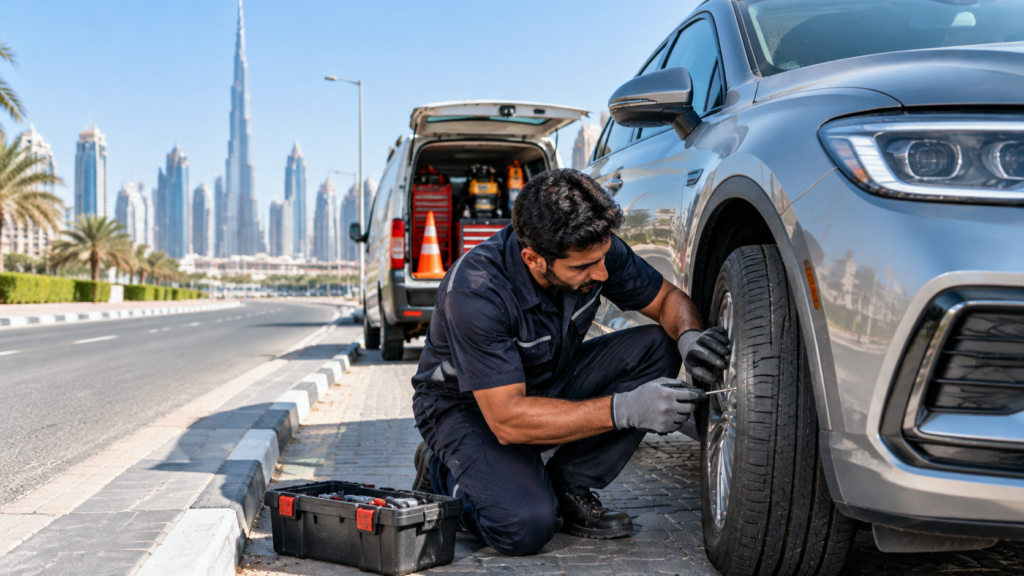
If you find a nail or screw in your tyre, do not assume that the tyre is safe to drive on. A tyre can lose pressure gradually or rapidly, and the visible object does not show the full extent of the damage.
Follow these steps:
- Find a safe place to stop. If you are moving, slow down gradually and avoid sudden braking or steering where possible.
- Check for obvious danger without putting yourself at risk. A flat tyre, bulge, cut, or visibly unstable wheel means you should not continue driving on that tyre.
- Do not pull out the nail or screw unnecessarily. Removing it may allow air to escape more quickly.
- Do not rely on the tyre pressure warning alone. A warning system may not reveal the full condition of the tyre.
- Arrange a professional inspection. If the tyre is flat or damaged, use a safe recovery or mobile tyre assistance option rather than driving to a workshop on it.
There is no universal safe distance that applies to every punctured tyre. Continuing to drive with insufficient pressure can damage the tyre internally and may affect the wheel as well.
Tyre Sidewall Puncture Repair: Can It Be Fixed?
A tyre sidewall puncture is different from a puncture in the central tread. The sidewall flexes as the tyre rotates and supports the vehicle under changing loads. Damage in this area can affect the tyre’s structural integrity.
For that reason, sidewall punctures and cuts generally require replacement rather than an ordinary puncture repair. Sidewall bulges and exposed cords are also warning signs that need prompt attention.
Do not accept an external seal or plug as proof that a structurally damaged sidewall is safe. Ask the technician to explain the damage and follow the tyre manufacturer’s guidance.
For more detail, see Michelin’s tyre repair guidance.
What Should a Technician Check Before Repairing a Puncture?
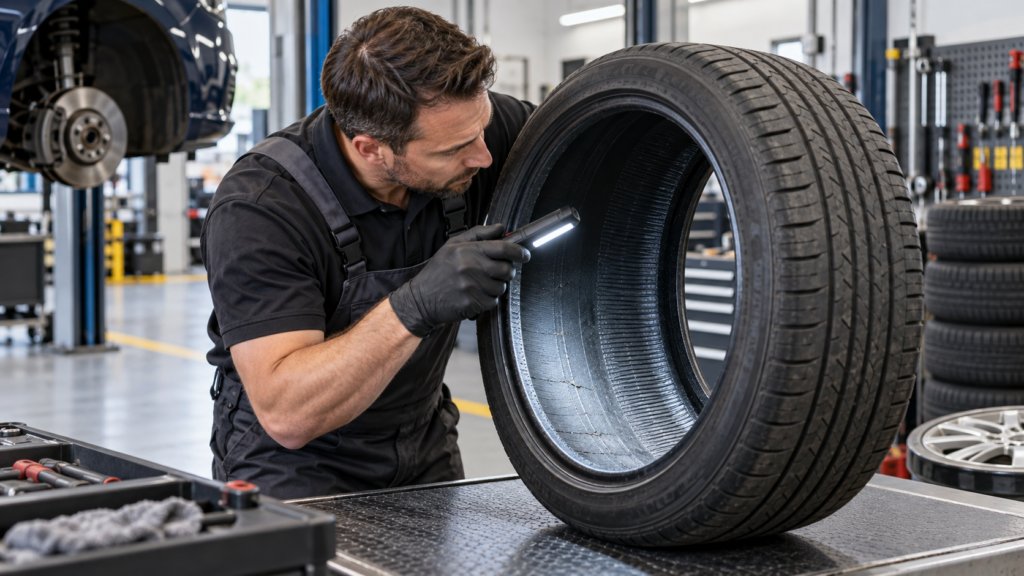
Finding the nail or screw is only the first step. The source of air loss and the tyre’s overall condition also need to be assessed.
A professional inspection should consider:
1. Puncture location
The technician checks whether the injury is in a repairable part of the tread or in an area where repair is not permitted.
2. Injury size and shape
The size, angle, and type of damage affect whether an approved repair is possible. A visible opening does not always show the full injury inside the tyre.
3. Internal tyre condition
Removing the tyre from the wheel allows the technician to look for signs of damage caused by low pressure, heat, or driving while flat.
4. Previous repairs and general condition
Existing repairs, tread wear, tyre age, cuts, bulges, and other damage may affect the decision.
5. Correct repair method
If the tyre is suitable for repair, the technician should use a method appropriate for the injury and follow the applicable repair procedure. A temporary external plug is not automatically equivalent to a properly assessed permanent repair.
6. Pressure and final checks
After the repair, the technician should carry out the appropriate checks, including checking inflation pressure and confirming that the repair and tyre are suitable for service.
If the tyre cannot be repaired safely, replacement should be discussed instead of attempting an unsuitable fix.
How to Get Tyre Puncture Repair in Dubai
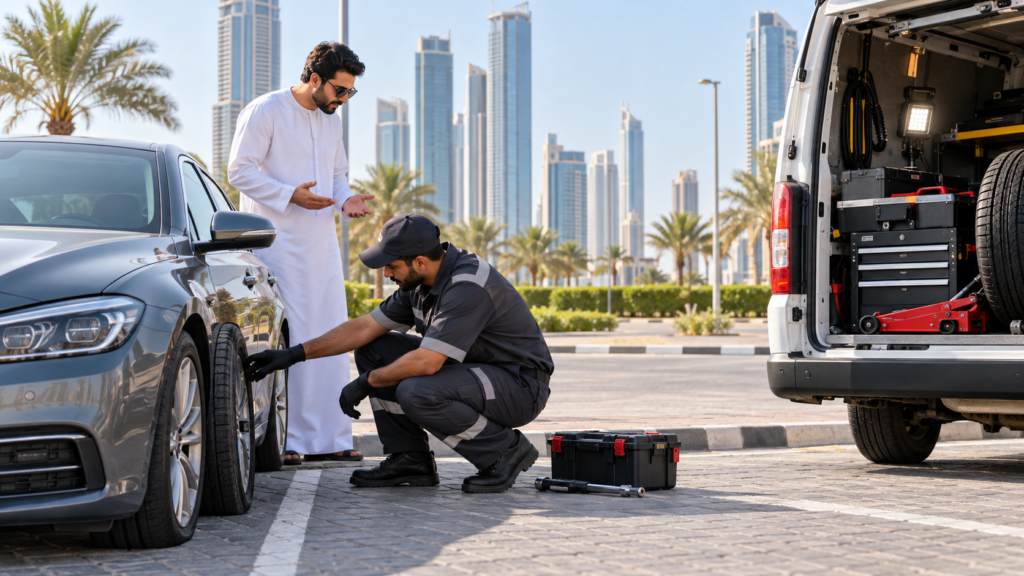
If you have a puncture in Dubai, the next step depends on the condition of the tyre and where the vehicle is located.
- Share your location and explain whether the tyre is losing air slowly or is completely flat.
- Tell the service provider if you drove after the tyre pressure dropped.
- Mention any visible sidewall damage, bulges, previous repairs, or temporary sealant use.
- Ask for the tyre to be inspected before a permanent repair is confirmed.
- If the tyre is unsuitable for repair, ask about the correct replacement option.
You can visit 800Tyre’s tyre puncture repair page for service information. If you need help with a broader tyre problem, visit the 800Tyre homepage to explore its services.
Service suitability, availability, and the appropriate repair or replacement option should be confirmed for your vehicle and location.
Frequently Asked Questions
Can a tyre puncture be repaired?
Yes, some punctures can be repaired when the injury is in a permitted tread area, meets the relevant damage limits, and has not caused unacceptable internal damage. A professional inspection is needed before confirming repairability.
Can a nail in a tyre be repaired?
A nail puncture in the central tread area may be repairable. The technician must check the injury size, location, internal condition, and repair history before deciding.
Can a tyre sidewall puncture be repaired?
Sidewall punctures generally require tyre replacement because the sidewall flexes during driving and damage may compromise its structure. Follow the manufacturer’s guidance for the specific tyre.
Should I drive with a punctured tyre?
Do not continue driving on a flat, visibly damaged, or unstable tyre. Stop safely and arrange an appropriate inspection or recovery option. Driving with low pressure can cause further internal damage.
Does every punctured tyre need replacement?
No. Some punctures can be repaired safely, while others cannot. The decision depends on the damage location, size, tyre condition, previous repairs, and manufacturer requirements.
Is an external tyre plug a permanent repair?
Not necessarily. A temporary external plug is not automatically equivalent to a properly assessed permanent repair. Ask the technician whether the tyre has been inspected internally and whether the method used is suitable for that specific injury.
What if I drove on the tyre after it lost pressure?
Tell the technician. Driving on an underinflated or flat tyre can damage the internal structure, even when the outside looks relatively normal. The tyre may need replacement after inspection.
How do I arrange tyre puncture repair in Dubai?
Start by explaining your location, the tyre’s condition, and whether it is safe to move the vehicle. You can review 800Tyre’s puncture repair service and confirm the available option for your situation.
Final Advice
A tyre puncture should be assessed by its location and condition, not by the size of the visible nail or screw alone. A suitable tread puncture may be repairable, while sidewall damage, a bulge, or internal damage from driving flat may require replacement.
If the tyre is flat or visibly damaged, avoid driving on it. Arrange a safe inspection and ask the technician to explain why repair or replacement is appropriate for your tyre.


