





Mushroom Plug vs Sticky Rope: The Right Way to Fix a Puncture
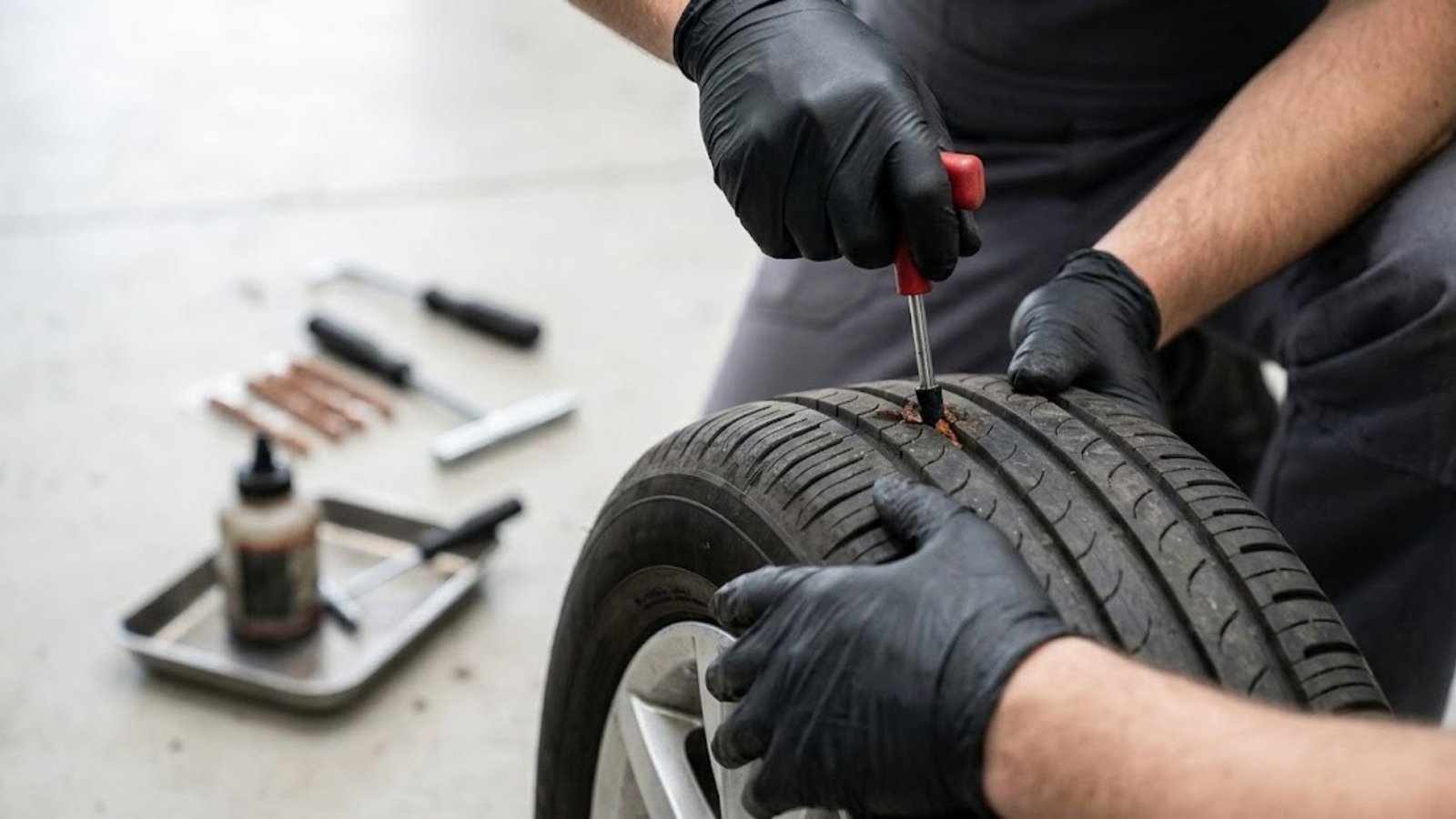
The proper puncture repair method is not a sticky rope pushed in from the outside. It is a plug-patch repair, where the tyre is removed, inspected from the inside, and sealed with a combined plug and patch. A sticky rope can get you moving in an emergency, but it is a temporary fix, not a permanent one. This guide explains the difference between a mushroom plug, a sticky rope and a full patch, and shows you which one is actually safe for your tyre.
Key Takeaways
- The proper puncture repair method seals the tyre from the inside, not just the outside.
- A sticky rope plug is a temporary emergency fix, not a permanent repair.
- A mushroom plug seals inside and out and lasts far longer than a rope.
- Tyre safety bodies recommend a plug-patch combination as the correct repair.
- Only tread punctures are repairable, never the sidewall or shoulder.
What is the proper puncture repair method?
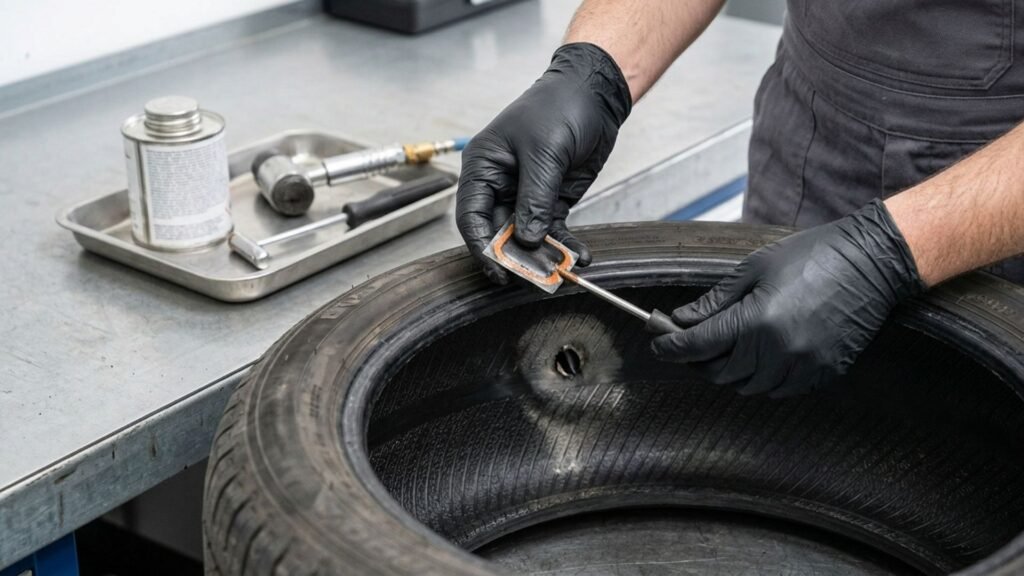
The proper puncture repair method is a plug-patch repair done from the inside of the tyre. The tyre is taken off the wheel, inspected for hidden damage, and sealed with a unit that plugs the hole and patches the inner liner at the same time. Tyre safety authorities treat this as the only permanent and safe repair, because it blocks air loss and stops moisture reaching the steel belts.
Here is how the three common methods compare.
| Method | How it works | Lasts | Verdict |
|---|---|---|---|
| Sticky rope plug | Pushed in from outside, no tyre removal | A few weeks to months | Temporary emergency fix only |
| Mushroom plug | Pulled through from inside, seals both sides | Often the life of the tyre | Good, near permanent when done right |
| Plug-patch (internal) | Tyre removed, inspected, sealed inside and out | Life of the tyre | The proper, permanent repair |
Why is a sticky rope plug only temporary?
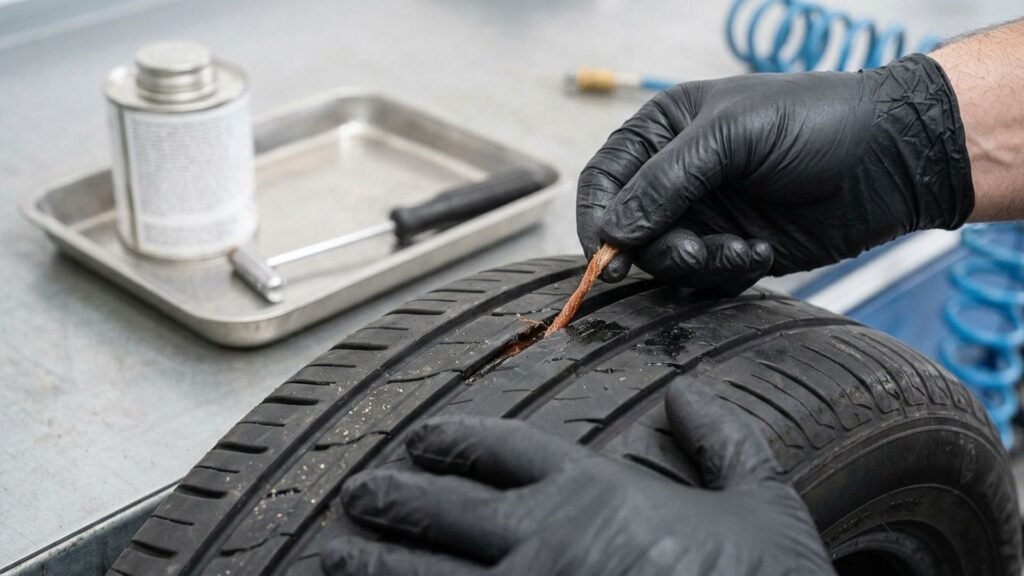
A sticky rope plug is temporary because it seals only the outside of the tyre and is held in place by friction alone. At highway speed and in heat, the rope dries out, shrinks and can start to leak. Because the tyre is never removed, no one checks the inside for hidden damage. Moisture can then creep down the open puncture channel and rust the steel belts, which weakens the whole tyre over time. Use a rope plug the way it is meant to be used: as a short-term way to reach a repair, not as the final fix.
How is a mushroom plug different?
A mushroom plug is shaped like its name, a wide head with a narrow stem. It is pulled through the puncture from the inside, so the wide head seals against the inner liner and air pressure pushes it tight. This seals the tyre from both sides, unlike a rope. When it is fitted correctly in the tread area, a mushroom plug can last the remaining life of the tyre.
- Seals the inside and the outside of the puncture
- Held by air pressure, not just friction
- Blocks moisture from reaching the steel belts
- Best for clean tread punctures, fitted by a professional
When can a puncture not be repaired at all?
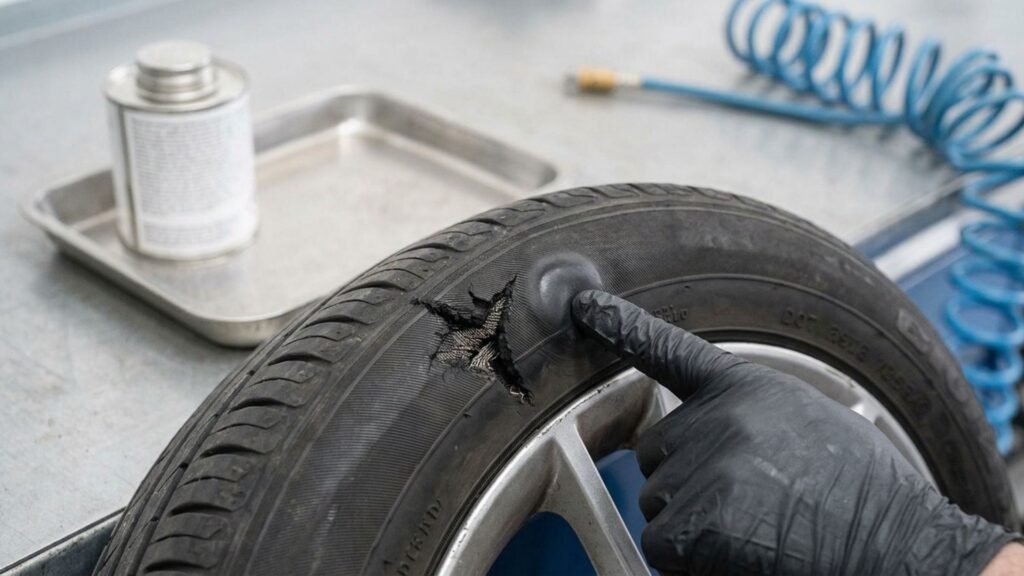
A puncture cannot be repaired when it is on the sidewall or the shoulder, when the cut is larger than about 6 mm, or when the tyre has run flat and the internal structure is damaged. Multiple punctures close together and very worn tyres also fail the safety check. In these cases the safe answer is a new tyre, not a repair.
- Sidewall or shoulder puncture
- Cut or gash larger than about 6 mm
- Tyre driven flat for a long distance
- Two punctures close together
- Tread already worn near the legal limit
What does the proper repair look like step by step?
A proper puncture repair follows a set order. The tyre comes off the wheel, the technician inspects the inside, the area is cleaned and buffed, and a plug-patch unit is fitted from the inside. The wheel is then refitted and balanced. This is slower than a rope, but it is the repair that lasts.
- Remove the tyre from the wheel
- Inspect the inside for hidden damage
- Clean and prepare the puncture area
- Fit a plug-patch from the inside out
- Refit and balance the wheel
Frequently Asked Questions
What is the proper puncture repair method for a car tyre?
The proper puncture repair method is a plug-patch repair done from the inside of the tyre. The tyre is removed, inspected and sealed inside and out. Tyre safety bodies treat this as the only permanent and safe repair.
Is a sticky rope plug safe for long-term use?
No. A sticky rope plug is a temporary emergency fix. It seals only the outside and can dry out and leak at speed. Use it to reach a repair, then have a proper plug-patch fitted.
Does a mushroom plug last the life of the tyre?
A mushroom plug can last the remaining life of the tyre when it is fitted correctly in the tread area. It seals both sides of the puncture, which is why it lasts far longer than a rope plug.
Can any puncture be repaired?
No. Only tread punctures are repairable. Damage on the sidewall or shoulder, cuts larger than about 6 mm, and tyres that ran flat cannot be safely repaired and need replacement.
How long should a proper puncture repair take?
A proper plug-patch repair usually takes 15 to 30 minutes, because the tyre is removed, inspected and sealed from the inside, then balanced before you drive.
Conclusion
The proper puncture repair method is a plug-patch done from the inside, not a sticky rope pushed in from the outside. A rope will get you moving, but only a mushroom plug or a full internal patch gives a lasting, safe repair. If you have a puncture in Dubai, we fit a proper internal repair at your location and balance the wheel before you drive. Call or WhatsApp +971 52 540 9044.


