




What to Do If You Get a Flat Tyre on Sheikh Zayed Road?
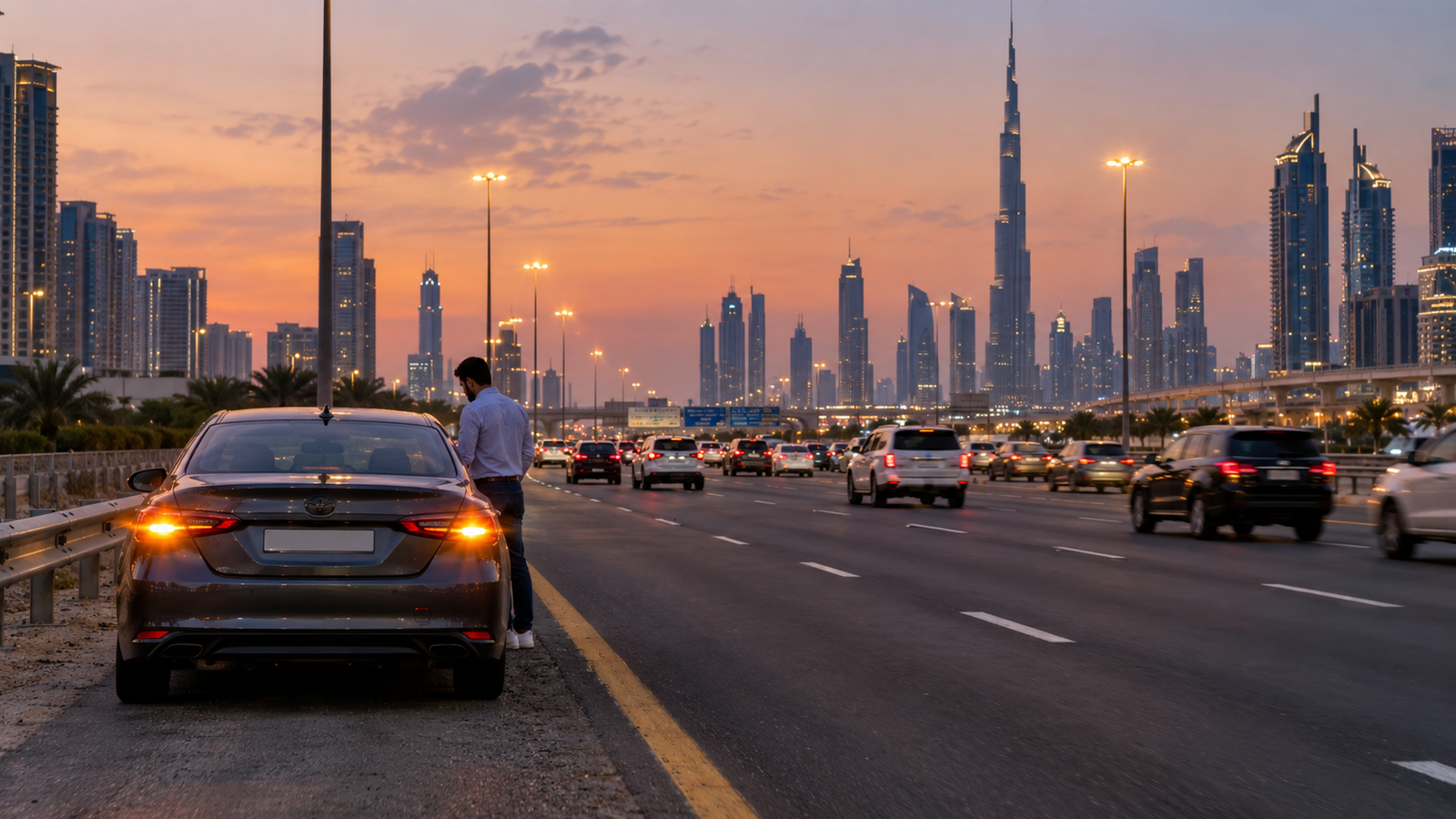
A flat tyre on Sheikh Zayed Road is one of the most dangerous situations a Dubai driver can face. The road runs at high speed, traffic is heavy, and there is often nowhere safe to stop. If you keep driving on a flat, you risk losing control. If you stop in the wrong place, you risk a collision. This guide gives you the exact steps to take when you get a flat tyre on Sheikh Zayed Road, who to call, and the RTA rules every driver should know to stay safe and legal.
Key Takeaways
- Do not brake hard or stop in a live lane, ease off and move to the hard shoulder.
- Switch on hazard lights and stay behind the barrier, away from traffic.
- Share your nearest exit and a live location pin when you call for help.
- Call a mobile tyre or roadside service rather than changing a tyre beside fast traffic.
- The UAE minimum tread depth is 1.6 mm, and tyres over 5 years old fail RTA inspection.
What should you do first if you get a flat tyre on Sheikh Zayed Road?
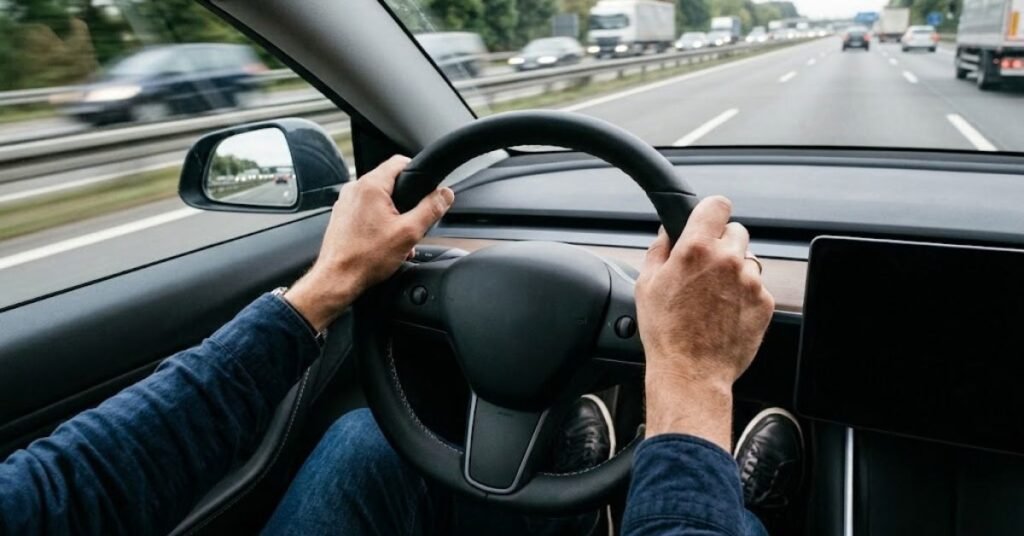
If you get a flat tyre on Sheikh Zayed Road, hold the steering wheel firmly, take your foot off the accelerator, and let the car slow down gradually. Do not brake hard, because a sudden stop at speed can cause a skid. Signal early and move to the hard shoulder or the nearest exit. The RTA warns drivers not to stop in a live traffic lane and to seek proper assistance instead.
Follow these first steps in order.
- Grip the wheel firmly and keep the car straight.
- Ease off the accelerator, do not brake hard.
- Signal and move to the hard shoulder or the next exit.
- Switch on your hazard lights.
- Apply the parking brake once you have stopped.
Where is it safe to stop on the highway?
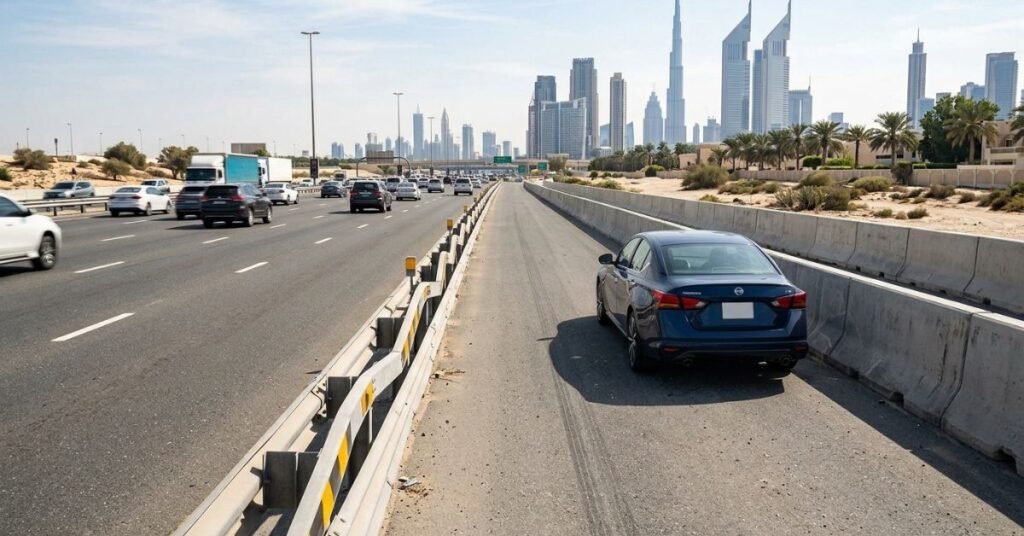
The safest place to stop is the hard shoulder, as far from moving traffic as possible, or the next exit or a nearby petrol station if you can reach it at low speed. Avoid stopping on a blind bend, a narrow shoulder, or a bridge. Sheikh Zayed Road spans about 55 km inside Dubai and carries heavy high-speed traffic, so distance from the live lanes is what keeps you safe. If your car is still drivable at very low speed and the next exit is close, it is often safer to reach the exit than to stop on a tight shoulder.
Should you change the tyre yourself or call for help?
On a high-speed road like Sheikh Zayed Road, calling for help is safer than changing the tyre yourself. Changing a wheel beside fast traffic puts you a few feet from cars passing at 100 km/h or more. Call a mobile tyre or roadside service, stay behind the barrier, and let a professional fit the spare or a new tyre. Only attempt a change yourself if you are in a genuinely safe, wide area.
Call for help instead of a self-change when any of these are true.
- You are on a narrow shoulder or near a blind bend
- You have no spare, jack, or wheel wrench
- The wheel rim is damaged from a blowout
- Traffic is heavy and fast
- You do not feel safe standing outside the car
How to stay safe while you wait?
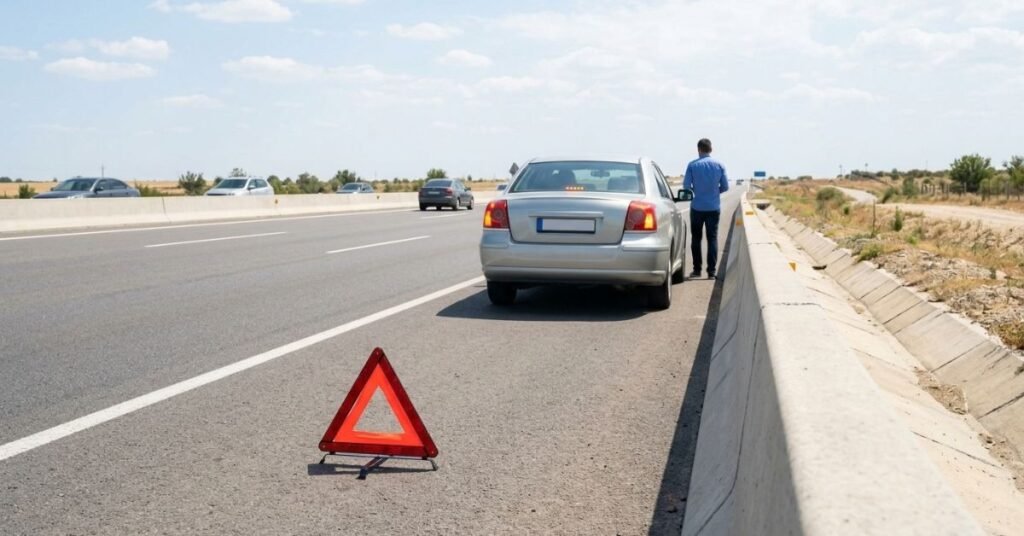
While you wait for help on Sheikh Zayed Road, keep your hazard lights on, place a warning triangle behind the car if you have one, and stand behind the safety barrier, not between the car and the traffic. Keep your phone on for the technician’s call and share a live location pin so they reach your exact spot. On some toll roads and tunnels stopping is not allowed, so follow the guidance you are given to the nearest safe point.
- Keep hazard lights on the whole time
- Place a warning triangle behind the car if you have one
- Stand behind the barrier, never beside the fast lane
- Keep passengers away from the traffic side
- Share a live GPS pin so help finds you fast
Who to call and what to tell them
Call a 24/7 mobile tyre or roadside assistance service and tell them your nearest exit, your car make and model, and whether you have a spare. A good provider reaches the hard shoulder fast, fits your spare or a new tyre on the spot, and gets you moving without a tow. Our roadside assistance in Dubai covers Sheikh Zayed Road day and night. Share your exit and a live pin and call +971 52 540 9044.
The RTA tyre rules every Dubai driver should know
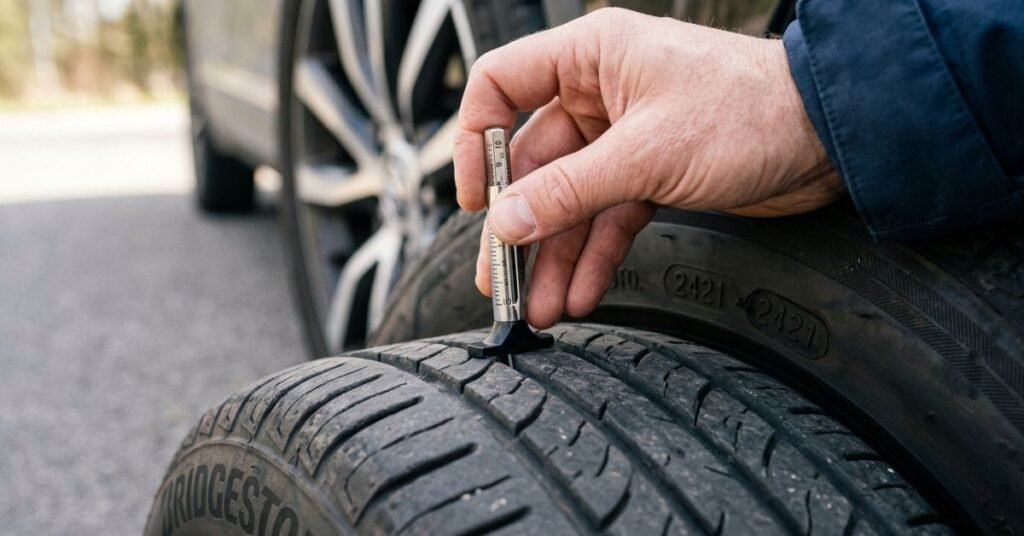
Two RTA rules matter most. The minimum legal tread depth in the UAE is 1.6 mm, and a tyre at or below this fails RTA inspection. Separately, tyres are treated as legally finished five years from their manufacture date, because the Gulf heat hardens and cracks the rubber. Worn or aged tyres are far more likely to fail on a hot highway, so replace them before they reach these limits.
- Minimum tread depth: 1.6 mm across the UAE
- Maximum tyre age: about 5 years from the manufacture date
- The 4-digit code on the sidewall shows the week and year of manufacture
- Driving on unsafe tyres can lead to fines and a failed inspection
Frequently Asked Questions
Who to call when you have a flat tyre?
Call a 24/7 mobile tyre or roadside assistance service when you have a flat tyre. They reach you on the hard shoulder, fit your spare or a new tyre on the spot, and get you moving without a tow. Tell them your nearest exit and share a live location pin. Call 800 TYRE on +971 52 540 9044.
What are the RTA tyre rules in the UAE?
The main RTA tyre rules are a minimum tread depth of 1.6 mm and a maximum tyre age of about 5 years from the manufacture date. Tyres below the tread limit or older than 5 years can fail RTA inspection. The manufacture date is shown by a 4-digit code on the tyre sidewall.
How much does it cost to repair a tyre puncture in the UAE?
A standard tyre puncture repair in the UAE usually costs about AED 75 to 150, depending on tyre size and the type of damage. Sidewall punctures cannot be safely repaired and need a new tyre. Always ask for the price before the work starts.
What is the speed limit on Sheikh Zayed Road in Dubai?
The speed limit on most of Sheikh Zayed Road in Dubai is 100 to 120 km/h, shown on the overhead and roadside signs, and it can be lower near interchanges and roadworks. Always follow the posted limit, because it changes along the route. Radar cameras enforce it closely.
What is the punishment for speeding in Dubai?
Speeding in Dubai is punished with fines, black points on your licence, and in serious cases vehicle confiscation. Fines rise with how far over the limit you drive, and driving more than 60 km/h above the limit carries the heaviest penalties. Always check the official Dubai Police fine schedule for current amounts.
What happens if you exceed the speed limit?
If you exceed the speed limit, a radar camera records your speed and a fine plus black points are added to your traffic file, usually visible within a day or two. Repeated or extreme speeding can lead to higher fines, more black points, and licence or vehicle penalties. Pay fines on time to avoid them building up.
Conclusion
A flat tyre on Sheikh Zayed Road does not have to turn into a crisis. Ease off the accelerator, move to the hard shoulder, switch on your hazards, and stand behind the barrier. Do not risk changing a wheel beside fast traffic, call a mobile roadside service and share your nearest exit and a live pin. Keep your tyres within the RTA tread and age limits so a flat is less likely in the first place. If you are stranded on the highway now, call or WhatsApp 800 TYRE on +971 52 540 9044.


