




Getting your tyre pressure right in Dubai is the single cheapest way to avoid a blowout, uneven wear and higher fuel bills. The correct tyre pressure in Dubai is the cold value printed on the sticker inside your driver door, not a lower number you let out because of the heat. This guide gives you a clear PSI starting point by car type, explains why summer heat makes the reading climb, and shows you exactly when and how to check.
Key Takeaways
- Set tyre pressure to the cold value on your driver door sticker, not the sidewall number.
- Most cars in Dubai sit between 30 and 35 PSI, but your exact number depends on the vehicle.
- Never let air out in summer. A hot tyre reading 40 PSI is normal and designed for.
- Check pressure early in the morning when tyres are cold, at least once a week in summer.
- Under-inflation plus Dubai heat is the main cause of summer blowouts.
What is the correct tyre pressure in Dubai?
The correct tyre pressure in Dubai is the cold pressure your carmaker recommends, shown on a sticker inside the driver door frame and in the owner manual. For most cars this falls between 30 and 35 PSI. The number printed on the tyre sidewall is the maximum the tyre can take, not the pressure you should run, so do not use it as your target.
Here is a typical cold-pressure starting point by vehicle type. Use it as a guide, then confirm the exact figure on your own door sticker.
| Vehicle type | Common examples | Typical cold PSI |
|---|---|---|
| Small hatchback or sedan | Yaris, Corolla, Civic, Sunny | 30 to 33 PSI |
| Mid sedan or crossover | Camry, Accord, Altima, small SUV | 32 to 35 PSI |
| Large SUV or 4×4 | Land Cruiser, Patrol, Prado, Pajero | 33 to 36 PSI, higher when loaded |
| Pickup or van | Hilux, D-Max, delivery vans | 35 to 40 PSI, higher when loaded |
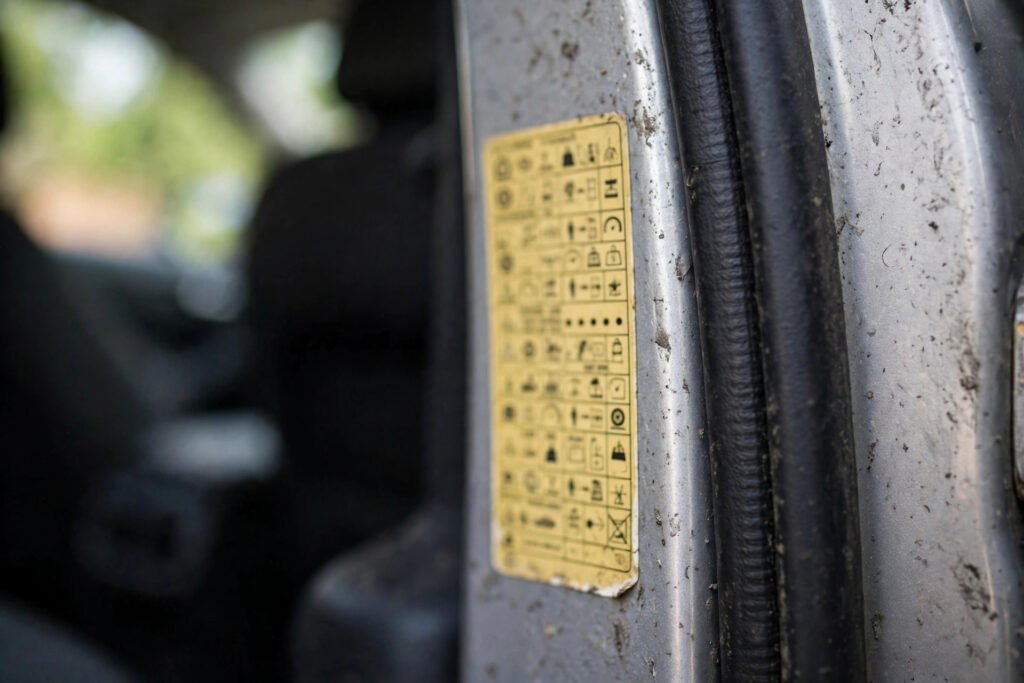
These are starting points, not exact settings. A loaded 4×4 heading to the desert and the same car empty in the city can have different recommended rear figures, and the door sticker usually lists both a normal and a fully loaded value.
Should you reduce tyre pressure in Dubai summer?
No. You should not let air out of your tyres in Dubai summer. This is the most common and most dangerous tyre myth in the UAE. Carmakers already set the recommended cold pressure knowing the tyre will heat up and the pressure will rise on the road. Letting air out to “make room” for the heat leaves the tyre under-inflated, which makes the sidewalls flex and overheat, and that is exactly what causes a blowout at speed.
Set your tyres to the recommended cold pressure and leave them there all year. The UAE roads authority also reminds drivers that correct pressure and sound tyres are a legal safety basic, so keeping to the maker figure protects you on both counts. You can read the UAE road safety guidance on the RTA website.
Why does tyre pressure rise in the heat?
Tyre pressure rises in the heat because air expands as it gets hotter. As a rough rule, pressure goes up about 1 PSI for every 5 to 6 degrees Celsius of temperature rise. In a Dubai summer the air is hot, the road surface can reach 60 to 70 degrees, and driving adds more heat through friction. So a tyre you set to 33 PSI in a cool morning can easily read 40 PSI or more by the afternoon.
That jump is normal and your tyre is built for it. The mistake is to see 40 PSI on a hot tyre and let air out. Once the tyre cools back down, it will now be under-inflated and unsafe. Always judge pressure from a cold reading.
When and how to check tyre pressure in Dubai
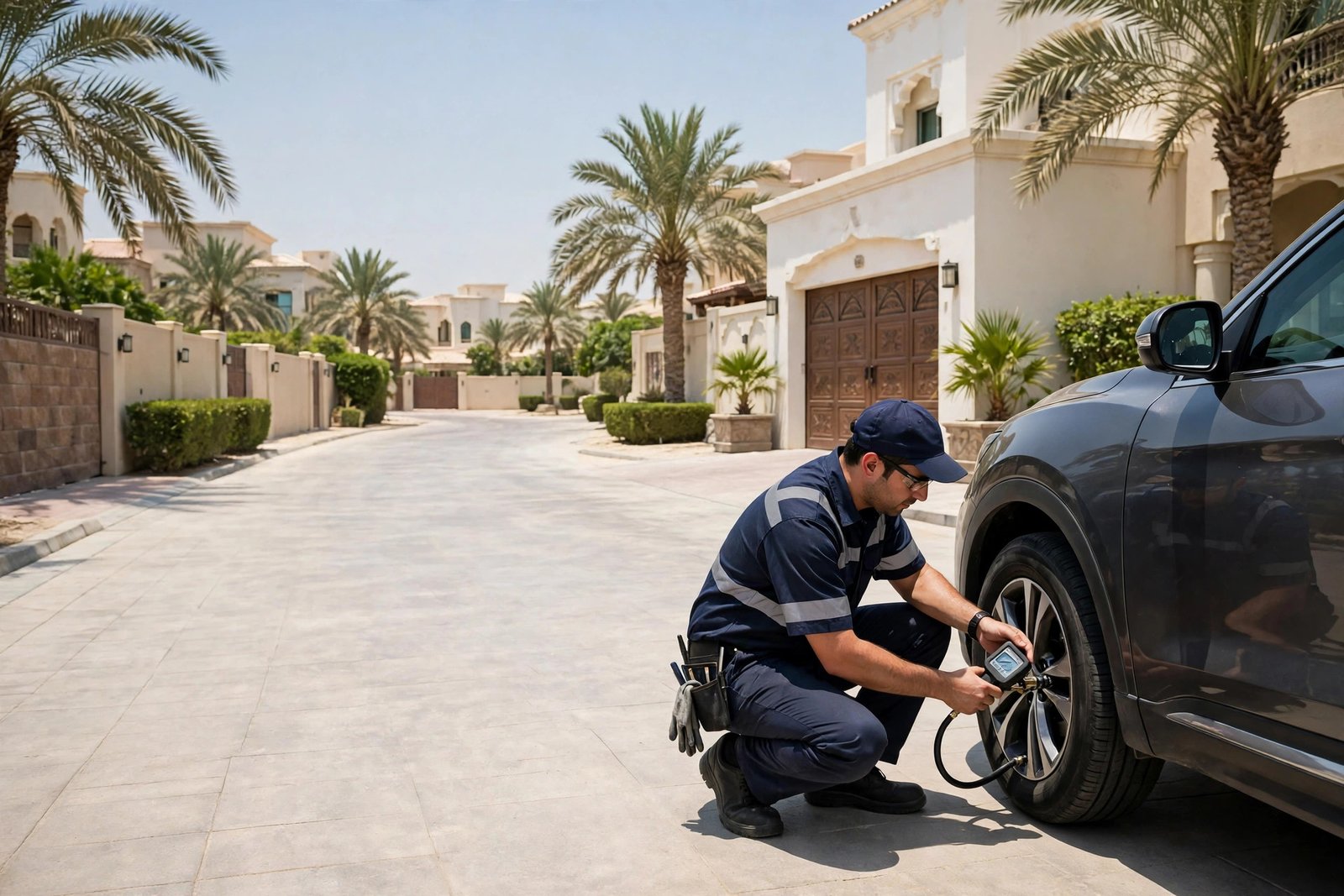
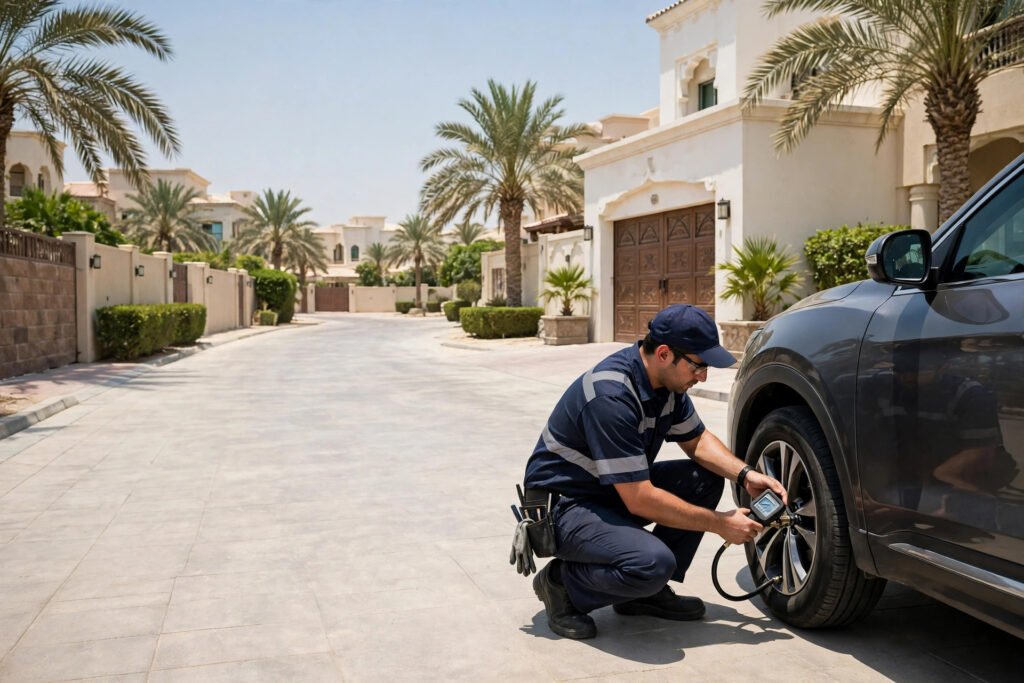
Check your tyre pressure early in the morning, before you drive, when the tyres are cold. A tyre counts as cold after the car has been parked for at least three hours or driven less than two kilometres. In summer, check weekly. In the cooler months, every two weeks is enough.
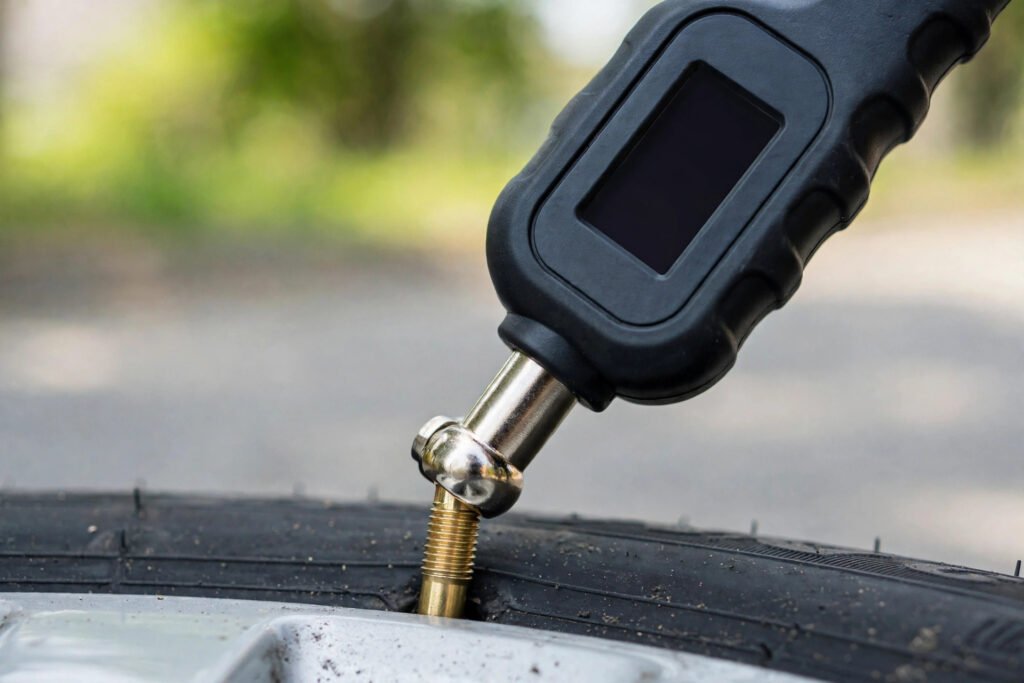
- Find your recommended cold PSI on the driver door sticker.
- Check all four tyres with a gauge, plus the spare.
- Top up any tyre that is below the figure. Do not exceed the sidewall maximum.
- If a tyre keeps losing air, you likely have a slow puncture that needs a proper repair.
If one tyre drops faster than the others, do not keep topping it up and hoping. A slow leak in the heat can turn into a flat on the highway. Our mobile tyre repair team in Dubai can check the pressure, find the leak and fix it at your home, office or the roadside.
What happens if your tyre pressure is wrong in Dubai heat?
Wrong pressure is unsafe in both directions, and the Dubai heat makes it worse. Under-inflation is the bigger danger in summer because it builds heat fast and leads to blowouts.
- Under-inflated: sidewalls flex and overheat, the tyre wears on both edges, fuel use rises, and blowout risk climbs at speed.
- Over-inflated: less rubber touches the road, grip and braking drop, the ride turns harsh, and the tyre wears down the centre.
- Correct: even wear, full grip, better fuel economy and the lowest blowout risk.
A flat or a blowout on a fast road like Sheikh Zayed Road is dangerous. If it happens, our guide on what to do with a flat tyre on the highway walks you through the safe steps.
What does the tyre pressure warning light mean?
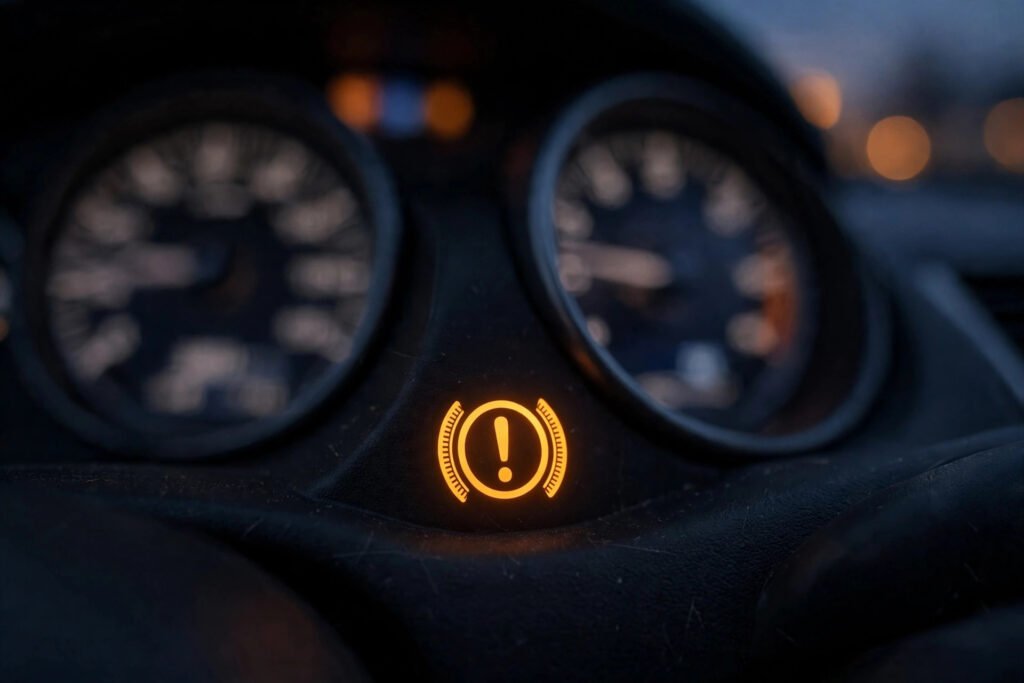
The tyre pressure warning light, part of the TPMS system, usually means at least one tyre has dropped about 25 percent below its recommended pressure. In a Dubai summer you may see it come on during a cool morning, because the pressure that looked fine in yesterday afternoon heat has fallen overnight. Do not ignore it. Check all four tyres cold and top up to the door sticker figure. If the light stays on after you correct the pressure, you may have a slow puncture or a faulty sensor that needs checking.
Frequently Asked Questions
What is the correct tyre pressure for a car in Dubai?
The correct tyre pressure for most cars in Dubai is between 30 and 35 PSI, measured cold. Your exact figure is on the sticker inside the driver door and in the owner manual. Always use that number, not the maximum printed on the tyre sidewall.
Should I lower my tyre pressure in summer in the UAE?
No. Keep your tyres at the recommended cold pressure all year. Carmakers already account for the heat rise. Letting air out leaves the tyre under-inflated, which overheats the sidewalls and raises the risk of a blowout.
How much does tyre pressure rise in Dubai heat?
Pressure rises roughly 1 PSI for every 5 to 6 degrees Celsius. In Dubai summer a tyre set to 33 PSI in the morning can read 40 PSI or more in the afternoon. This is normal, so always check and set pressure when the tyre is cold.
How often should I check tyre pressure in summer?
Check your tyre pressure at least once a week during the Dubai summer, and before any long drive. Check it cold, early in the morning, and include the spare tyre.
Is the pressure on the tyre sidewall the one I should use?
No. The sidewall figure is the maximum pressure the tyre can safely hold, not the recommended setting for your car. Use the cold pressure on the driver door sticker instead.
My tyre keeps losing pressure in the heat. What should I do?
A tyre that keeps losing pressure usually has a slow puncture, a leaking valve or a damaged rim seal. Topping it up is only a temporary fix. Have it inspected and properly repaired. We can do this at your location anywhere in Dubai.
Conclusion
Correct tyre pressure in Dubai is simple once you know the rule. Set each tyre to the cold figure on your door sticker, most often between 30 and 35 PSI, never let air out in summer, and check weekly when it is hot. That one habit protects your grip, your fuel bill and your safety through the worst of the heat. If a tyre keeps losing air or the warning light will not clear, call or WhatsApp 800 Tyre on +971 55 155 6030 and we will check and fix it at your location, 24/7.


